 Che il 2013 fosse l’anno dei processori ARM Cortex A15 lo si sapeva, grazie anche alla primizia del Nexus 10 che ha sotto il cofano l’Exynos 5 di Samsung e si sapeva anche che Nvidia avrebbe mostrato i muscoli proprio al CES di Las Vegas, cosa che è puntualmente avvenuta.
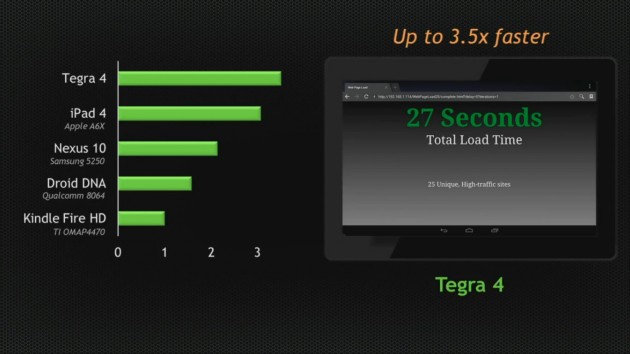
Proprio oggi,infatti, è stato ufficialmente annunciato quello che, secondo Nvidia, è il Soc più veloce e potente al mondo, definendo il Tegra 4, in base ai soliti benchmark eclatanti per quanto riguarda la navigazione web, ben 2 volte più veloce rispetto al diretto concorrente di Samsung e 3.5 volte rispetto ad un Kindle Fire HD. Solo l’iPad 4 riesce a tenergli testa, seppure sia stato superato anch’esso dall’ultimo nato di casa Nvidia.
Anche dal punto di vista energetico questo processore permette miglioramenti sull’autonomia, grazie alla particolare architettura sviluppata da Nvidia, la quale consente ai 4 core di lavorare in maniera indipendente in base al carico di lavoro e saranno attivi tutti insieme e al massimo, solo quando necessario, in maniera trasparente al sistema operativo e alle applicazioni. Si parla addirittura di 14 ore continuate di riproduzione video HD su smartphone (anche se dipende sempre dalla potenza della batteria).
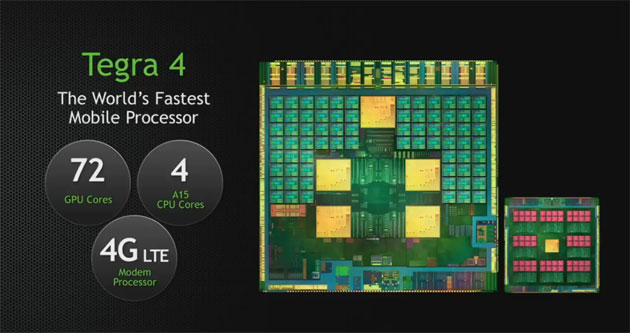
La cosa che sicuramente fa più impressione, sono i 72 core presenti nella GPU, che consentono una velocità di elaborazione 6 volte superiore rispetto ad un Tegra 3, per esperienze ludiche e grafiche di altissimo livello anche in ambito web e multimediale, tramite applicazioni WebGL e HTML5.
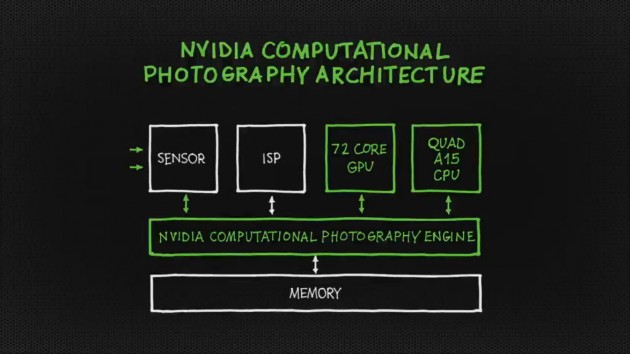
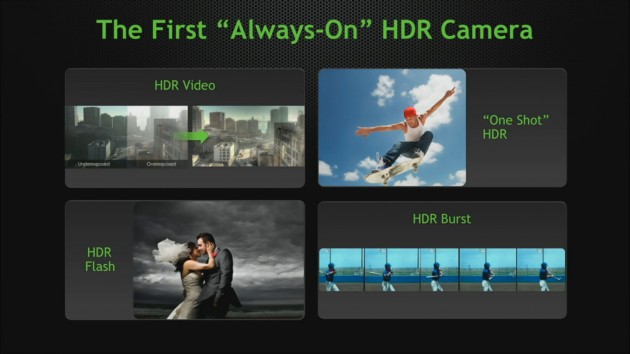
Anche dal punto di vista della fotocamera, ci sono miglioramenti impressionanti per quanto riguarda la potenza di elaborazione HDR per video e foto. La nuova architettura fonde insieme la potenza della CPU, GPU e ISP e dove oggi occorrevano circa 2 secondi per permettere all’HDR il doppio scatto a differenti esposizioni per avere foto con una resa ottimale della luce, ora si arriva all’effetto HDR su foto e video in tempo reale ! Ovvero scatti in real time con risultato finale dell’effetto in appena 0,2 secondi.
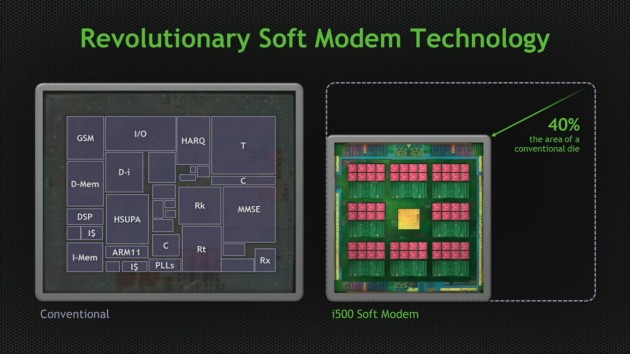
Tegra 4 offre anche il supporto voce e dati tramite LTE, grazie al chipset opzionale NVIDIA Icera i500 modem processor, il primo completamente riprogrammabile via sofware, per dare ai produttori la massima flessibilità nella gestione delle frequenze, ottimizzando quindi anche il processo produttivo, utilizzando un solo chipset per tutta le possibilità esistenti.
Che dire ? Sulla carta è davvero un mostro ma, come sempre, attendiamo una prova sul campo 😉
A seguire il comunicato stampa ufficiale:
NVIDIA Introduces World’s Fastest Mobile Processor
Tegra 4 Features 72 Custom GPU Cores, Quad-Core Cortex-A15 CPU for Superb Performance and Efficiency; LTE Enabled with Optional Chipset
LAS VEGAS—CES—Jan. 6, 2013—NVIDIA today introduced NVIDIA® Tegra® 4 , the world’s fastest mobile processor, with record-setting performance and battery life to flawlessly power smartphones and tablets, gaming devices, auto infotainment and navigation systems, and PCs.
Tegra 4 offers exceptional graphics processing, with lightning-fast web browsing, stunning visuals and new camera capabilities through computational photography.
Previously codenamed “Wayne,” Tegra 4 features 72 custom NVIDIA GeForce™ GPU cores – or six times the GPU horsepower of Tegra 3 – which deliver more realistic gaming experiences and higher resolution displays. It includes the first quad-core application of ARM’s most advanced CPU core, the Cortex-A15, which delivers 2.6x faster web browsing and breakthrough performance for apps.
Tegra 4 also enables worldwide 4G LTE voice and data support through an optional chipset, the fifth-generation NVIDIA Icera® i500 processor. More efficient and 40 percent the size of conventional modems, i500 delivers four times the processing capability of its predecessor.
“Tegra 4 provides enormous processing power and efficiency to power smartphones and tablets, gaming devices, auto systems and PCs,” said Phil Carmack, senior vice president of the Tegra business at NVIDIA. ”Its new capabilities, particularly in the area of computational photography, will help improve a whole range of existing products and lead to the creation of exciting new ones.”
Computational Photography Capability
Among the Tegra 4 processor’s breakthroughs is its Computational Photography Architecture, which automatically delivers high dynamic range (HDR) photos and video by fusing together the processing power of the GPU, CPU and the camera’s image-signal processor.
Its HDR capability captures images, including those taken with a flash, the way they are seen by the human eye – with detail in both bright and dark areas.
Unprecedented Power Efficiency
Designed for maximum energy efficiency, Tegra 4 includes a second-generation battery saver core for low power during standard use, and PRISM 2 Display technology to reduce backlight power while delivering superior visuals.
Tegra 4 consumes up to 45 percent less power than its predecessor, Tegra 3, in common use cases. And it enables up to 14 hours of HD video playback on phones.
Tegra 4 Key Features
· – GeForce GPU with 72 custom cores
· – Quad-core ARM Cortex-A15 CPU, plus a 2nd Generation Battery Saver Core
· – Computational Photography Architecture
· – LTE capability with optional Icera i500 chipset
· – 4K ultra-high-def video support
VIA
ì
Articoli che potrebbero interessarti